

Flush Your Water Heater Annually

Robert G. Aguirre
Your water heater works quietly in the background every day, supplying hot water for showers, laundry, dishes, and cleaning. Because it is usually tucked away in a garage, closet, basement, or utility room, it is easy to forget about it until something goes wrong. One simple maintenance task that can help keep it running efficiently is flushing the tank once a year.
Over time, minerals and sediment can collect at the bottom of a traditional tank-style water heater. This buildup is especially common in areas with hard water. As sediment settles inside the tank, it can make the system work harder to heat the water, reduce available hot water, create popping or rumbling sounds, and shorten the life of the unit.
Annual flushing helps remove that buildup before it becomes a bigger problem.
Why sediment buildup matters
Most tap water contains some level of minerals, such as calcium and magnesium. When water is heated, these minerals can separate from the water and settle at the bottom of the tank. A small amount of sediment may not seem like a big deal, but over time it can form a layer between the burner or heating element and the water.
When that happens, your water heater may need more energy to do the same job. You might notice that hot water runs out faster, takes longer to recover, or makes unusual noises during operation. In some cases, sediment can also contribute to corrosion, clogged valves, and uneven heating.
Flushing the tank helps clear out loose sediment so the system can operate more efficiently.
Benefits of flushing your water heater
Flushing your water heater once a year can help improve performance and reduce unnecessary strain on the unit. A cleaner tank can heat water more evenly, which may help lower energy waste and improve recovery time.
It can also help extend the lifespan of the water heater. While every system eventually needs to be replaced, regular maintenance can reduce the chances of avoidable wear and tear. For homeowners, that means fewer surprises and a better chance of catching issues before they become expensive repairs.
Another benefit is noise reduction. If your water heater makes popping, crackling, or rumbling sounds, sediment may be part of the problem. Flushing the tank may help reduce those sounds, especially if the buildup is not too severe.
How often should you flush it?
For most homes, flushing a tank-style water heater once a year is a good rule of thumb. However, homes with very hard water may benefit from flushing every six months. If you are not sure how hard your water is, look for signs like mineral spots on faucets, cloudy glassware, dry-feeling skin after showers, or white buildup around fixtures.
A water softener can also help reduce mineral buildup, but it does not eliminate the need for regular water heater maintenance.
Tankless water heaters also need maintenance, but the process is different. Instead of flushing sediment from a storage tank, tankless units are typically descaled to remove mineral buildup from the heat exchanger. Always check the manufacturer’s instructions for your specific model.
Basic steps for flushing a tank-style water heater
Before doing any maintenance, read your owner’s manual and follow the manufacturer’s instructions. If you are uncomfortable working around water, electricity, gas, or hot surfaces, call a licensed plumber.
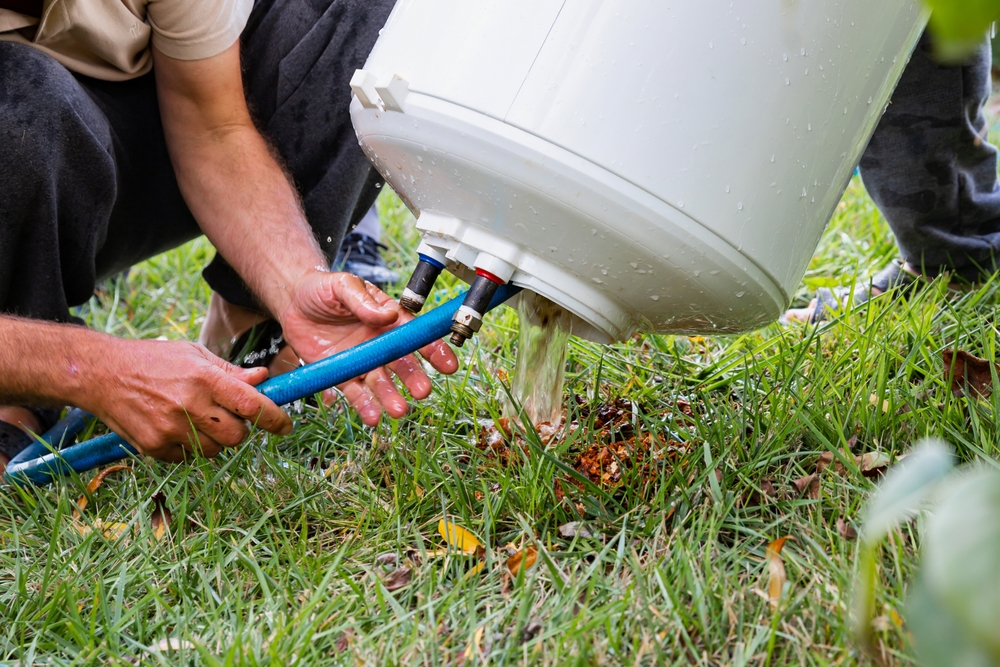
In general, the process usually involves turning off the power or gas supply to the water heater, shutting off the cold water supply, connecting a garden hose to the drain valve, and running the hose to a safe drainage area. Once the valve is opened, water and sediment can drain from the tank.
Because the water may be extremely hot, use caution and keep children and pets away from the work area. Some homeowners allow the tank to cool before draining to reduce the risk of burns.
After the tank drains, the cold water supply can be briefly turned back on to stir up and flush out remaining sediment. Once the water runs clear, the drain valve is closed, the tank is refilled, and power or gas is restored only after the tank is full.
Never turn the power back on to an electric water heater before the tank is refilled. Running the heating elements without water can damage them quickly.
When to call a professional
Flushing a water heater can be a manageable maintenance task for some homeowners, but there are times when it is better to call a professional. If the drain valve is stuck, leaking, or clogged, forcing it open can cause damage. If the water heater is old, rusty, making loud noises, leaking from the tank, or showing signs of corrosion, a plumber should inspect it before you attempt to drain it.
You should also call a professional if you smell gas, see water pooling around the unit, notice discolored hot water, or have inconsistent hot water even after maintenance. These can be signs of a larger issue.
Keep maintenance on your yearly checklist
Flushing your water heater annually is a simple way to help protect one of your home’s most-used systems. It can improve efficiency, reduce sediment-related issues, and help your water heater perform more reliably throughout the year.
Adding this task to your annual home maintenance checklist can save you stress later. A little preventive care now may help you avoid cold showers, higher utility costs, and unexpected repair bills down the road.